
[ad_1]
Want more tried and tested recommendations from the Editors of Women’s Health? Sign up to our monthly newsletter The Edit. Click here to subscribe.
We’ve come a long way from the days of plastic pedometers you clipped to the top of your jeans. These days, the best fitness trackers can help you train smarter, sleep better and stay on top of your health. The catch? There are now almost too many to choose from.
That’s where we come in. We tested the latest fitness trackers, sports watches, smart rings and screenless wearables to find the models genuinely worth wearing day in, day out.
Today’s fitness trackers do far more than count steps. Studies have found that using fitness trackers can improve motivation and increase daily activity. Research also suggests that the right wearable can help make healthier habits feel more achievable.
Depending on the model, they can map runs, monitor heart rate, analyse sleep, track menstrual cycles, keep tabs on stress, measure training load and recovery, and even take calls or make contactless payments. Some are designed for serious athletes, while others are better suited to everyday health tracking, so the best option depends on what you actually want from your wearable.
Wearable tech is personal, too, so it’s important to choose something that’s relevant to your lifestyle. If you’re not going to use fancy features such as built-in GPS, for instance, what’s the point in shelling out for it?
To give you a helping hand, our expert editors strapped on the best of the best fitness watches to find the ones worth your time. Keep scrolling for our reviews, plus everything you need to know before shopping for a fitness tracker.
How to choose a fitness tracker
Overwhelmed by all the choice? Fret not – we’ve listed all the specs alongside each device, to help you decide whether it’s worth buying for you. These are the main ones to keep an eye out for.
Fitness tracking
You should demand fitness tracking from your fitness tracker? Go figure. But it’s not quite that simple. The least you should expect from modern devices is accurate data on your number of steps, distance covered, total sleep and heart rate, as well as your estimated calorie burn. Some fitness watches will go further and offer an in-depth look at your sleep, including how long you spend in light, heavy and rapid eye movement (REM) phases, and a few can show which heart rate zone you were in at different points during your workout.
Water resistance
The popularity of open water swimming rivalled that of banana bread during lockdown, and the health trend has lasted a lot longer than its carb-y counterpart. If you want to record your swimming sessions, you’ll need a fitness watch that’s water-resistant. If you prefer a swimming pool to a lake or the sea, and want a bit more data on your time in the water, some models can track your distance covered and how many lengths you swim, while others can automatically detect which stroke you’re using.
Battery life
Many fitness trackers nowadays will last a few days on a full charge but models rammed with smart features, such as the Apple Series 8, will need charging more frequently. For those of you who are a tad forgetful, many models have power-saving algorithms and can last for an entire day after charging for just five minutes. Not bad!
Smartphone notifications
An untimely notification can throw a spanner in the works of any good workout, with the irresistible urge to check your phone turning a short break between hip thrusts into a social media scrolling session. Thankfully, many sports watches can sync with smartphones, displaying calls and messages as they arrive. This way, you’re saved from falling into an Instagram hole.
Apps
Fitness trackers will sync to a smartphone to display your key health stats on an app. While some will just provide an easy-to-read alternative to your fitness watch’s screen, others will offer additional features such as being able to log what you eat. Some Fitbit products include a trial of Fitbit Premium, but the length and terms vary by device. The core tracking features remain available without an ongoing subscription. The brand describes it as a resource that can provide guided programmes and workout regimes to help you ‘stay active, sleep well, manage stress and more.’
How we tested these fitness trackers
Each and every tracker featured in this guide was thoroughly tested by a member of the Women’s Health team for at least a month, often significantly longer. We wore them daily to assess comfort, battery life, design, and real-world accuracy across sleep, steps, heart rate, GPS, and workouts, from strength sessions to long runs to Pilates.
We also explored the accompanying apps to evaluate ease of use, data insights, and overall value. Our goal? To find the best wearables for women looking to boost their fitness, track recovery, or simply stay on top of their health, whatever their lifestyle or training goals.
The best fitness trackers to buy in 2026

Apple Watch Series 11
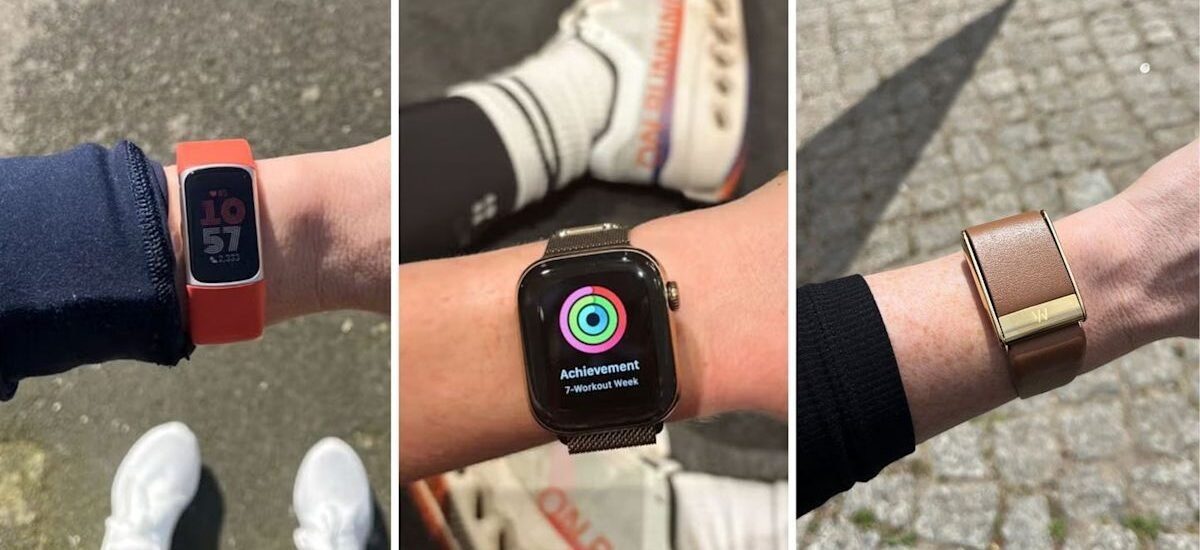
The Apple Watch Series 11 is the best all-rounder for anyone in the Apple ecosystem. The watch does all the necessary fitness tracking and health monitoring, as well as everyday conveniences such as answering calls, checking your diary and replying to texts, in a way few competitors can match. The battery life is still a drawback, but it has improved from the Series 10: Apple now rates it at up to 24 hours, or 38 hours in Low Power Mode. It also charges quickly, reaching up to 80% in around 30 minutes.
Fitness-wise, it tracks everything from strength training to yoga and open-water swimming. If you’re a runner, you’ll appreciate how well it integrates with Strava and Runna, syncing training plans directly to the watch face.
The Apple Watch stands out from most competitors when it comes to design. With a choice of sleek metallic finishes or more casual, sporty straps, it’s a smartwatch that isn’t as bulky or clunky as many others. The Series 11 also has a more scratch-resistant Ion-X glass display on aluminium models – twice as resistant to scratches as the Series 10 – which is a useful upgrade for anyone who’s prone to knocking their watch against gym equipment.
The Vitals app provides a snapshot of key health metrics, including heart rate, respiratory rate and wrist temperature, offering useful insights into overall wellbeing. Sleep Score is a new addition, while hypertension notifications can alert you to possible signs of chronically high blood pressure. It can also detect potential signs of sleep apnoea, something that could be genuinely life-changing for many.
It’s definitely on the expensive side, but if Apple is your go-to brand for other tech, this is the watch for you.

Apple Watch Series 11
amazon.co.uk
£369.00
Hearst Owned
Google Fitbit Charge 6
The Fitbit Charge 6 refines the popular mid-range tracker with subtle but still impactful upgrades. It retains the compact, swim‑proof design (50 m water‑resistant) with a vibrant 1.04‑inch AMOLED touchscreen, comfortable silicone band, and now a responsive side‑button for easier navigation, even with wet hands.
Under the hood sits a full suite of health and fitness sensors: GPS, heart‑rate (PPG), ECG, SpO₂, EDA stress detection, 40+ workout modes, sleep staging and Smart Wake alarms . Sleep tracking is consistently reliable and detailed, on par with more premium trackers we’ve tried. Battery life hovers around 5–7 days, with heavier use (GPS, always‑on display) reducing that somewhat. Crucially, Fitbit’s integration into Google has unlocked first‑time features for the Charge series, such as Google Maps, Google Wallet, and YouTube Music.
Drawbacks include inconsistent GPS performance (particularly if worn too loose or snug), a small screen not ideal for long workouts, and advanced metrics locked behind a Fitbit Premium subscription. For serious athletes or runners, a dedicated sports watch remains preferable, to be honest. In saying that, the Charge 6 is arguably Fitbit’s best all‑round tracker to date: compact, feature‑rich, and enhanced by Google apps. It’s ideal for everyday users seeking robust health tracking without the bulk or cost of a fully-fledged smartwatch.
Read more: Fitbit Charge 6 review

Google Fitbit Charge 6
amazon.co.uk
£98.99
Hearst owned
WHOOP Whoop 5.0
For anyone, like me, who is serious about recovery, the Whoop 5 isn’t just a fitness tracker, it’s a 24/7 health coach that helps you balance rest, recovery and activity levels. Unlike traditional wearables, there’s no screen, which means the battery life is impressively long at up to 14 days.
Sleek and lightweight, it’s easy to forget you’re wearing it. My main critique of the previous WHOOP was that all the bands were ugly, so I appreciate the addition of this stylish leather belt I feel comfortable wearing to events as well as the gym. Although, the real magic happens in the app, where heart rate variability, resting heart rate, and sleep data are distilled into simple scores for strain, recovery, and sleep that help me better plan my day. It also gives me detailed menstrual cycle insights, giving me accurate information about where I am in my cycle.
Whoop’s insights feel helpfully actionable which makes it easier to make real, lasting change. If your recovery is low, it’ll suggest taking it easy. High? Push harder. The Sleep Coach even recommends ideal bedtimes and wake times based on your goals. On the rare occasions I have a weeknight drink the impact on my scores is so scary it puts me off completely.
But there are trade-offs. There’s no built-in GPS and no display, which means when I run I tend to wear a smartwatch as well, which is a lot of kit. Plus, you’ll need a monthly subscription (from £16) to access any data, meaning it’s an ongoing cost.
Read more: WHOOP review

WHOOP Whoop 5.0
amazon.co.uk
£229.00
Oura Ring 5
There’s no accessory more common to see in the Women’s Health office than an Oura Ring. Our ecommerce editor, senior ecommerce editor, health editor, and fitness director are all longtime fans of the device, and can often be heard swapping sleep scores over their desks in the morning.
At first glance, the Oura Ring 5 could easily pass for a regular piece of jewellery, but don’t let its minimalist design fool you. It’s packed with sensors that deliver impressively detailed data, particularly around sleep, stress, menstrual cycles and recovery.
The biggest upgrade compared to the Oura Ring 4 is the design. The Ring 5 is 40% smaller, lighter and thinner, making it much more comfortable to wear day and night. I’ve worn it through sleep, heavy dumbbell sessions and reformer Pilates classes, and have genuinely forgotten it’s there. The smaller profile also makes it look more like jewellery than wearable tech.
The sensing system has been upgraded, too, with improved overnight heart rate and recovery data, as well as more responsive activity detection during lower-impact workouts such as yoga, stretching and strength training. Live activity tracking is another useful addition, although the ring still relies on your phone for GPS.
The new women’s health features are particularly welcome, with personalised insights for hormonal contraception and menopause. However, these are software updates rather than Ring 5-exclusive hardware features.
The battery lasts around a week (we can confirm this from testing), while 100m water resistance means you can wear it through showers, swims and workouts. As before, most insights require an Oura Membership (£5.99/month), and the ring remains expensive at £399.
If you already have an Oura Ring and are happy with it, stick with it. But for first-time buyers, I’d go straight for the Oura Ring 5. It offers the same excellent sleep and recovery tracking as before, but its dramatically smaller design makes it far easier to wear consistently – meaning you get far more accurate data back as a result.
Read more: Oura Ring 5 review

Oura Ring 5
ouraring.com
£399.00
Hattie Parish
Garmin vívoactive 6
Ah, the almighty Garmin vívoactive 6 – a.k.a. my long-time watch. I wear it so much that my wrist feels naked without it. For years, I was a hardcore Forerunner 255S wearer, but after I discovered this model, it became my go-to for when I’m not seeking intense training metrics while running.
When I was dealing with a stress fracture in my foot, I wore it while indoor cycling to see how hard my heart was working. The bright 42mm display makes it easy to view my stats without feeling overbearing. I also love that I can easily switch which watch data I want to see in the Garmin app whenever I feel like going back to my OG.
While I’m not someone who struggles with getting proper sleep, the tracker features an integrated Sleep Coach that offers tips on how much sleep you need, in addition to nap detection. One of my favourite features is the Smart Wake Alarm, which gently vibrates to wake you once you’ve had the right amount of sleep. It’s not startling at all, and that’s coming from someone who typically gets super freaked out when woken up.
Garmin says the battery lasts up to 11 days, but I find it lasts closer to two weeks with regular use. During a month of testing, I barely had to charge it, which is great when travelling. It also has built-in GPS and more than 80 sports apps and activity profiles, so it’s versatile enough for everything from indoor cycling and strength training to running, swimming and yoga.
For everyday health tracking, sleep and recovery insights, it’s hard to beat. Serious runners may want a Forerunner with more advanced training data, but for everyone else, this is a brilliant all-rounder.

Garmin vívoactive 6
amazon.co.uk
£220.99
Justin Steele
Amazfit Active 2
While the Fitbit Charge 6 is already a great value fitness tracker, the Amazfit Active 2 starts at £99.90, earning it our best budget badge. It looks remarkably similar to my beloved Garmin, but costs a fraction of the price, which automatically attracted me.
Besides its good looks, the tech is impressive for its low cost. I took it for a spin during a HIIT workout (one of the more than 160 activities it tracks!) to see how it performed when measuring heart rate. It recorded my heart rate as pretty high, which sounded accurate given the intensity of the session. I also compared it with my Garmin and it showed similar stats (yes, I was wearing one on each arm).
Post-workout, I slept like a baby with it and woke up to my sleep-cycle stats and score. It’s a little bulky to sleep with, weighing around 30g without the strap and measuring approximately 44mm, but it didn’t disrupt my snooze session. It also tracks sleep stages, naps, breathing quality and recovery, making it a useful option if you want a fuller picture of your health without paying a premium price.
I also put it through its paces during half-marathon training, particularly to make sure my heart stayed in Zone 2. Having my stats displayed in real time was a helpful reminder to slow down and pace myself on easy runs. The data it stored – and then uploaded to Strava – helped me adapt my training, set goals and make sure I was staying on track. When race day came, I felt confident that it would track my distance without a problem.
Battery life is another major strength. Amazfit says it can last up to 10 days with typical use, or up to 21 hours with continuous GPS. Even with near-daily workout tracking, I rarely saw the battery dip below 50% before deciding to charge it, and it powered back up in under an hour. Even on two-hour runs, I barely noticed a dent in the charge.
For anyone looking for an affordable fitness smartwatch with built-in GPS, a strong range of workout modes and useful health insights, the Amazfit Active 2 is difficult to beat. Just bear in mind that it comes in one case size and doesn’t offer the same depth of training analysis as a Garmin running watch.

Amazfit Active 2
amazon.co.uk
£74.99
Olivia Luppino
HUAWEI Watch Fit 5
Looking for a fitness tracker with all the bells and whistles of a sports watch, but without the hefty price tag? This latest release from HUAWEI is what you’ve been looking for. With a free accompanying health app and bucketloads of functions, it might just be the best-value tracker on the market.
First, let’s talk about the design. We’re all thinking it, so let’s just say it: yes, it does look remarkably like the Apple models it’s rivalling – it just happens to be significantly cheaper. It’s also super-lightweight, with an incredibly durable, scratch-resistant screen and a comparatively long-lasting battery life. The 1.82in AMOLED display now reaches up to 2,500 nits, making it easier to read in bright sunlight, while the watch itself weighs approximately 27g without the strap.
Onto the fitness side. I didn’t love it announcing at an ear-splitting volume how slow I was at running when I took it out for its first spin, especially when it was so hard to work out how to change the settings. In fact, the UX is generally less intuitive than I’d like. But the sheer range of workouts you can track makes up for this, plus the heart rate accuracy is good and the recovery data it provides is comprehensive.
The WATCH FIT 5 also adds mini-workouts, with guided movements designed to fit into shorter pockets of time, alongside built-in GPS, fall detection and more detailed running and cycling data. Its health tracking has been upgraded, too, with enhanced sleep monitoring, all-day HRV insights and pulse-wave arrhythmia analysis. Women’s health tracking is now easier to find, with the watch using vital-sign data to help predict periods and ovulation.
The mood-tracking isn’t particularly accurate – I got told I was in a bad mood when I was asleep, for example – but this is less of a deal-breaker than it was on the previous model now that the women’s health tools feel more fully integrated.
But all in all, this is an excellent option for anyone who wants a hard-working smartwatch on their wrist that isn’t going to be too painful on the wallet.

HUAWEI Watch Fit 5
amazon.co.uk
£139.99
Hearst Owned
Samsung Galaxy Watch Ultra2
The Samsung Galaxy Watch Ultra2 is a rugged wearable packing all the everyday tools you’d expect from a top-tier smartwatch. It’s serious about fitness, too, with the firepower to handle daily workouts and bigger challenges, from Hyrox and road marathons to trail ultras and scuba dives.
This latest incarnation is built tough, with a titanium frame, dual-band GPS, a bigger battery and the brightest screen in the business. It survived two weeks of bodyboarding, sea swimming and trail running without a scuff in sight, while the softer strap made it more comfortable than its predecessor. That said, it’s still among the chunkier smartwatches and is likely to feel bulky on smaller wrists.
The Watch Ultra2 offers an impressive array of health-tracking tools, including sleep, activity, heart rate, ECG, blood oxygen, blood pressure, body composition and menstrual-cycle predictions. Its Energy Score, HRV data and new one-stop Vitals feature provide a useful picture of recovery, while Daily Cardio Load helps you keep tabs on whether you’re training too hard.
With more than 100 sports modes, plus new trail-running and scuba-diving features, it covers most workout needs. However, you don’t quite get the deeper, more targeted training insights found on Garmin and COROS watches.
Battery life is excellent for a smartwatch. I found myself charging it every three days or so, including an hour of GPS-tracked training each day. For Samsung owners and Android users who want a balance of everyday convenience, health insights and adventure-ready fitness features, this is an excellent option.
Read more: Samsung Galaxy Watch Ultra2 review

Samsung Galaxy Watch Ultra2
amazon.co.uk
£649.00
Kieran Alger
Google Pixel Watch 4
Fitbits are the classic fitness-tracking straps that have had something of a glow-up since they first launched as small black bands. Now that Fitbit’s software has been installed on Google’s Pixel Watch 4, the result is a treat for the eyes: a performance- and health-based tracker that looks good, too. With a streamlined design that’s chunky enough to be cool but not so sporty that you have to take it off for work, it’s a great daily watch and tracker.
When worn 24/7, the Google watch tracks your load, stress and sleep to give a comprehensive view of your health, energy and goals, with a daily readiness score and cardio load target. I found the readiness score compared well with how I was feeling and what I know about my body, and the cardio loads were accurate for assessing how hard I worked while running. However, as is the problem with other watches, muscle strain isn’t measured, so hardcore weight-lifting workouts would be logged as minimally strenuous on the app, not reflecting the true intensity of my sessions.
You can set up health monitors such as irregular heart-rhythm notifications and ECG readings, as well as track your period to notice any symptoms across the month. I haven’t quite worked out whether the watch changes your readiness and load goals in line with where you are in your cycle.
The Pixel Watch 4 brings several useful upgrades over its predecessor. Its display is brighter, with up to 3,000 nits and slimmer bezels, while the new 41mm and 45mm sizes make it easier to find a better fit. Battery life has improved significantly, lasting up to 30 hours on the smaller model or 40 hours on the larger one, with Battery Saver extending this to 48 or 72 hours. Charging is faster, too.
The new Loss of Pulse Detection feature can contact emergency services if the watch detects a potential loss of pulse and you don’t respond, although it requires signal. LTE models also offer Satellite SOS, allowing you to contact emergency services when you’re off-grid.
The watch is otherwise simple to use, with easy access to workouts and insights. However, it only works with Android phones, so iPhone users will need to look elsewhere.

Google Pixel Watch 4
amazon.co.uk
£249.00
Hearst Owned
Polar Pacer Pro
The Polar Pacer Pro fitness watch is a great choice for runners and fitness enthusiasts, offering a sleek and comfortable design that stands out from other brand options.
The watch offers an enormous amount of running-specific features that can make a major difference in the way you train. From health tracking data like accurate heart rate tracking, sleep monitoring, step count and general activity tracking to more in depth programs and functions like swimming metrics, training targets, training load planning and fuel planning for longer runs while the integration with various wellness apps further enhance its functionality.
It also boasts an impressive battery life, and the extensive sport profiles make it a solid companion for tracking workouts and monitoring progress. Plus, the free app provides easy access to data without extra costs.
As I mentioned regarding the Polar Vantage M3, the Polar Flow app feels a bit dated and isn’t the most intuitive to use, which may frustrate some users. The watch’s screen, while functional, isn’t as high quality as other Polar models, and navigating through menus can be somewhat tedious. Despite these minor drawbacks, the watch offers good value for money, making it a strong choice for those looking to track runs, create training plans and monitor recovery effectively.

Polar Pacer Pro
amazon.co.uk
£177.99
Hearst owned
Garmin Forerunner 55
Designed with runners in mind, the latest addition to Garmin’s popular Forerunner series keeps a detailed record of your pace, distance, time and speed. Stats are displayed on the bright screen, which can be customised to show the data that matters most to you – a real standout feature.
As is customary for Forerunners, this tracker is controlled using a series of buttons along the edge of the watch face. The absence of a touchscreen may alarm some, but our expert found the buttons responsive, making it easy to scroll through data mid-workout.
Running aside, the Forerunner will track your daily activity levels including step count and distance travelled, as well as monitoring your sleep stats. It will also record the likes of swimming sessions, HIIT and Pilates.
However, with the data on offer and the affordable price point, we’d most recommend this to entry-level runners looking to ramp up their training.

Garmin Forerunner 55
amazon.co.uk
£118.49
Hearst owned
COROS PACE 4
If hitting the trails is on your radar, the COROS PACE 4 belongs in your virtual basket. Its biggest highlight is the GPS system, which has been upgraded to dual-frequency for better accuracy in challenging environments. It supports route navigation, with distance checkpoints and alerts if you make a wrong turn – essential for staying safe in the mountains or unfamiliar areas. The barometric altimeter is also useful for keeping tabs on elevation, helping you pace yourself during long runs and hikes. Courses and maps can be added through the COROS app, but if you’re old-school, there’s a compass in the watch, too.
Besides hiking, it can record an impressive number of activities, including trail running, jumping rope, skiing, rowing, snowboarding and strength training. Compared with the Fitbit Charge 6, it’s definitely designed for more intense exercise. However, it similarly tracks heart rate by zone and sleep by stage, along with steps and calories burned. For what it’s worth, my heart rate was identical to what was showing on the Charge 6 when I checked – I wore both at the same time. New to the PACE 4 are SpO₂ (blood oxygen) and body-temperature monitoring, which add another layer of health data that the PACE 3 didn’t offer.
The biggest upgrade you’ll notice is the display. The PACE 4 swaps the PACE 3’s MIP display for a gorgeous AMOLED screen with 164% higher resolution, making it significantly easier to read mid-workout. There’s also a new Action button for quick navigation and marking points of interest on a route. While lightweight at 32g with the nylon band, the watch face is large at 43.4mm, so it’s definitely bulky on a petite wrist. It’s not a tracker I’d wear every day, and it’s something I’d save for when it’s time to work out. On the plus side, the touchscreen interface is easy to use once you get the hang of the two side buttons and digital dial.
Battery life is really solid: up to 19 days in daily-use mode and 41 hours with high GPS enabled. That’s significantly better than many everyday fitness trackers and gives it plenty of stamina for long hikes, multi-day adventures and marathon training.
The PACE 4 is best suited to runners, hikers and outdoor enthusiasts who prioritise accurate tracking and long battery life over smartwatch extras. It may feel like more watch than you need for casual activity tracking, but for serious training and exploring, it’s a brilliant option.

COROS PACE 4
amazon.co.uk
£229.00
Jeff Dengate
Google Fitbit Air
Fitbit is among the latest wearables to get in on the screenless action, with the Air model being the slimmest we’ve tested at just 17mm wide. It’s a small, clip-on sensor that tracks your heart rate, heart rate variability, blood oxygen, skin temperature, sleep and movement, without a screen or monthly subscription.
It’s certainly slim and more unobtrusive than other screenless trackers I’ve worn. However, I didn’t find it especially comfortable on my (admittedly) very small wrist. The sensor unit is almost as long as the top of my wrist, so it sticks out more noticeably on me than it does on others. I’d recommend checking the fit carefully if you have particularly small wrists.
The Fitbit Air’s data is viewed through the Google Health app, which is clean, easy to navigate and highly customisable. It brings together steps, calories, sleep, readiness and cardio load, while also giving you a useful overview of your heart rate, HRV, breathing rate and blood oxygen. Most of these core features are included without a subscription, however Google Health Premium is optional and adds Gemini-powered coaching, adaptive fitness plans and more detailed sleep insights.
Battery life is impressive at up to seven days, and five minutes of charging is enough for up to a full day’s use. The trade-off is that there’s no built-in GPS, so outdoor workout routes rely on your phone. I also found that automatic activity tracking wasn’t perfect, particularly for strength workouts, so you may need to start some sessions manually.
Gemini can add helpful context to your data, but its recommendations aren’t always reliable or well worded. But for an affordable, distraction-free introduction to screenless tracking, the Fitbit Air is a strong option – provided it fits your wrist comfortably.

Google Fitbit Air
amazon.co.uk
£84.99
Hattie Parish
Samsung Galaxy Watch8
On the opposite spectrum of the Apple Watch Series 11, the Samsung Galaxy Watch8 is exclusively designed to pair with Android smartphones. As a non-Apple user, this is an excellent fitness tracker that comes head-to-head with the Series 11, including sleep apnoea detection and an ECG sensor that can monitor for irregular heart rhythms. I didn’t receive any of these notifications – thank God – but I did get detailed daily reports of my heart rate zones during workouts and nightly sleep cycles, like the majority of fitness trackers in this guide.
It tracks activities you wouldn’t typically see, such as bowling, ballet, Pilates, ice hockey and horse riding. I used it to track a mat Pilates class and an indoor cycling session given my orthopaedic boot status (no running for me, sigh). I take calorie-burn stats with a grain of salt when using any tracker, but it got the job done by giving me a rough estimate of exercise intensity.
I also find the body-composition feature super cool, although it’s most likely not 100% accurate in the way that DEXA and BIA tests can be. New to the Galaxy Watch8 are antioxidant-index and vascular-load measurements, plus a running coach feature that creates personalised training plans – a nice touch for anyone training for a race. Samsung’s Energy Score and Bedtime Guidance also use your sleep and health data to offer more personalised recommendations.
The watch case comes in 40mm and 44mm sizes, and at 11% thinner than the Galaxy Watch7, it genuinely feels sleeker on the wrist. The 40mm model weighs 30g, while the 44mm weighs 34g. Despite the thinner case, it feels durable, thanks to its tough Armour Aluminium construction, 5ATM water resistance and IP68 rating. However, I find the band too big for my wrist. It’s the small-to-medium size, but it still bulges outwards. For reference, I’m about 5ft 3in and have a small frame.
The display is also brighter this time around at 3,000 nits, making it easy to read even in direct sunlight. Battery life has improved over its predecessor – Samsung rates it at up to 40 hours – but actual use with the always-on display and workout tracking still means charging every one to two days. Given its competitive price point, I can’t really complain.
The Galaxy Watch8 is a strong option for Android users who want a smartwatch that balances everyday features with detailed health and fitness tracking. Just note that some features, including blood-pressure monitoring and certain AI tools, require a compatible Samsung Galaxy phone and Samsung account.

Samsung Galaxy Watch8
amazon.co.uk
£219.00
Samsung
Polar Vantage M3
If you consider yourself an outdoor enthusiast, this watch is a worthy investment that could even keep you safer when off the beaten trail. Offering a high-quality screen, excellent navigation systems, and the ability to download offline maps, it’s ideal for activities like trail running, hiking, and skiing.
Its super durable build and water resistance make it well-suited for rugged adventures, while the long battery life ensures reliability on extended trips. You can even use the super bright LED screen as a flashlight should you be caught out after dark.
Despite its tough design, it remains comfortable for daily wear, and features so many health tracking apps I’d be here all day if I even tried (some include sleep tracking, wrist ECGs, SpO2 and nightly skin temps).
The training data is really where this watch stands out, forget paying for a trainer you can create a really serious training plan, monitor your progress, recovery and growth all at your wrist. Make training targets, plan your peak performance season and receive a weekly summary to review for the week ahead.
The app, while functional, feels dated and can be buggy at times. Additionally, the watch’s size may feel clunky on smaller wrists, particularly for women, and while it offers sleep tracking, wearing it overnight isn’t the most comfortable. That said, for those seeking a reliable, adventure-ready watch with strong navigation features, durability and long battery life, this is a fantastic option.

Polar Vantage M3
amazon.co.uk
£263.99
Polar Vantage M3
Garmin Lily 2 Active
What sets this new model apart from its contemporaries is its sleek hybrid design, which combines all the essential sporting functionality with a classic watch face, hands and strap. It’s also (importantly) comfy to wear during exercise.
It’s aimed at the more casual exerciser who wants the benefits of a smartwatch, but loves an analogue look. Just swipe on the watch face to locate the LED touchscreen where you’ll find easy-to-read notifications for texts, calls and calendar reminders.
But don’t think that means this isn’t up to Garmin’s usual standard. It tracks your heart rate, sleep, menstrual cycle and hydration, as well as measuring blood oxygen, stress levels and breaths per minute. Plus, it has the added safety benefits of incident detection and live location tracking.
In other words, it’s a powerful piece of equipment – it just likes to look a little more unassuming.

Garmin Lily 2 Active
amazon
£297.99
Hearst
What is the best fitness tracker for sleep?
After testing out a vast array of trackers for sleep, our favourite for sleep has to be the Oura Ring 5. It’s more comfortable to wear during the night than a band or watch, and the sleep data it provides is seriously impressive.
Almost all of the Women’s Health team wear an Oura Ring, and we’ve all made positive lifestyle changes in order to improve our sleep scores based off the information it provides.

What is the best fitness tracker for monitoring your heart rate?
When it comes to keeping tabs on your ticker, the Apple Watch Series 11 sets the bar. Its advanced sensors deliver accurate, real-time heart rate tracking whether you’re smashing a HIIT class, logging long runs or winding down with yoga. You’ll get instant alerts if your heart rate spikes unexpectedly or dips too low, plus the option to take an ECG straight from your wrist. Overnight, the Vitals app keeps watch on your resting rate and variability, giving you deeper insight into recovery.
Stylish, intuitive and seriously smart, it’s the ultimate fitness companion for your heart health.
Which is the best value fitness tracker?
If you want big-name features without the big-ticket price, the Fitbit Charge 6 is the tracker to beat.
Sleek, lightweight and under £150, it delivers heart rate tracking, built-in GPS, 40+ workout modes and even ECG functionality, perks usually reserved for pricier smartwatches.
It’s just as at home counting your steps on the school run as it is mapping your Sunday long run, and with a week-long battery life, you won’t be tied to a charger. Add in Fitbit’s user-friendly app and motivational nudges, and you’ve got serious health insights at a fraction of the cost. Smart, simple and superb value.
What is the best fitness tracker app?
Many of the fitness trackers we tried came with accompanying apps, but none compared to WHOOP.
Think of the WHOOP app as your personal performance coach, right in your pocket. Unlike traditional trackers that stop at steps and calories, WHOOP dives deeper, analysing heart rate variability, sleep quality and daily strain to give you a true picture of how your body’s coping. Each morning, you’ll get a recovery score that helps you decide whether to push harder or prioritise rest.
The app even offers actionable insights, from sleep coaching to stress management, so you can train smarter, not just harder. Paired with its discreet band, WHOOP turns your data into decisions that genuinely elevate your wellbeing.
Are fitness trackers waterproof?
It’s a fair question: can you really wear your fitness tracker in the pool, shower or a sweaty spin class? The answer is, most modern trackers are water-resistant, but not all are created equal. Many popular models are rated to 50 metres, making them swim-friendly and perfectly fine for everyday splashes.
Others, however, are better kept dry. The key is checking the spec sheet – look for ‘water-resistant’ or ‘swim-proof’ labels before you dive in. And remember, while water won’t usually harm your device, soaps, shampoos and hot tubs can. Treat it with care, and it’ll track your laps as well as your lifts.
Can fitness trackers measure blood pressure?
Blood pressure is a trickier metric than steps or heart rate, so don’t expect your average fitness tracker to replace a medical-grade cuff. Most mainstream devices can’t measure it directly, but a few newer models are experimenting with sensors that estimate blood pressure trends through pulse wave analysis.
While promising, these readings aren’t yet as accurate as traditional monitors, so they’re best used for spotting general patterns rather than making clinical decisions. If blood pressure tracking is your priority, check whether the device is medically validated—and always consult your GP before relying on a wearable for serious health insights.
Note: Health readings are for general wellness and aren’t intended to diagnose medical conditions.
More tried-and-tested tech…
[ad_2]
Source link