

[ad_1]
Are these just another trend?
Walk into almost any serious fitness community today and there’s a good chance you’ll hear the word peptides.
Once primarily associated with pharmaceutical research and specialized laboratory science, peptides have become a major topic in bodybuilding, sports performance, recovery, longevity, and fitness conversations. Social media has only accelerated the trend, with athletes, influencers, coaches, and recreational lifters increasingly discussing compounds that were once relatively obscure.
So, why are peptides becoming so popular in fitness?
The answer is complicated.
Part of the interest comes from the growing amount of legitimate peptide research. Part comes from the potential for highly targeted biological activity. And part comes from social media, where anecdotal experiences can spread much faster than scientific evidence.
A 2026 critical review of peptide and peptide-analogue use in recreational and professional sport noted that compounds including growth hormone secretagogues and growth hormone-releasing hormone analogues are increasingly promoted for areas such as muscle growth, fat metabolism, recovery, and anti-inflammatory effects. At the same time, the researchers emphasized that clinical evidence supporting many of these applications in sport remains limited.
For fitness enthusiasts, understanding both sides of the conversation is essential. Our team at Generation Iron is going to break it down.
What Are Peptides?

Before understanding the hype, it’s important to understand what peptides actually are.
Peptides are short chains of amino acids connected by peptide bonds.
They’re found naturally throughout the body and can function as signaling molecules, hormones, or components of larger biological systems. Scientists can also synthesize peptides for research and pharmaceutical development.
One reason peptides have attracted so much scientific attention is their ability to interact with specific biological targets.
Rather than thinking of “peptides” as one single type of compound, it’s more accurate to think of them as an enormous family of molecules with very different structures and functions.
Some are being investigated for metabolic pathways. Others are studied in endocrine signaling, tissue biology, immune function, neurological research, or drug development.
In fact, peptide therapeutics have become an increasingly important area of pharmaceutical science, with hundreds of peptide candidates being investigated across a wide range of medical applications.
Why Are Bodybuilders Interested in Peptides?
The fitness industry’s interest in peptides largely revolves around several areas:
- Muscle growth research
- Growth hormone signaling
- Body composition
- Recovery
- Tissue biology
- Metabolic health
- Fat-loss research
- Longevity research
Certain peptides interact with biological pathways that athletes already care about.
For example, some compounds are studied in relation to the growth hormone axis, while others are being investigated for metabolic or tissue-related pathways.
That doesn’t mean every peptide produces these outcomes in humans. Instead, it means researchers have identified biological mechanisms worth studying.
That distinction is often lost in social media discussions.
Growth Hormone-Related Peptides
One of the biggest reasons peptides became popular in bodybuilding is their connection to growth hormone research.
Compounds such as CJC-1295, sermorelin, and ipamorelin are frequently discussed because of their relationship with the growth hormone regulatory system.
Sermorelin, for example, is a peptide analogue studied for its interaction with the growth hormone-releasing hormone receptor. NewBioRx describes laboratory research involving sermorelin and GHRH receptor signaling, including downstream endocrine pathways associated with growth hormone release.
CJC-1295 has similarly attracted attention because researchers can use it to investigate growth hormone regulatory pathways and receptor activity.
For bodybuilders, the appeal is obvious.
Growth hormone has long been associated with body composition, recovery, and other physiological processes relevant to athletic performance.
But studying a pathway isn’t the same thing as proving that an experimental peptide will produce a desired bodybuilding outcome.
The Rise of Recovery Peptides

Another major driver of peptide popularity is recovery. Fitness communities frequently discuss compounds such as BPC-157 and TB-500 in relation to tissue biology and recovery.
Research involving BPC-157 has explored pathways related to vascular biology, cellular migration, extracellular matrix processes, and other biological mechanisms.
TB-500, meanwhile, is associated with research into mechanisms involving cellular movement and actin-related processes.
This has created significant interest among athletes dealing with the wear and tear that comes with intense training.
However, a 2026 review of injectable peptides in sports medicine concluded that clinical adoption and marketing have moved faster than high-quality evidence and regulatory consensus for many of these compounds.
That’s an important point. Research interest is not the same as clinical proof.
Peptides and Body Composition
Body composition is another major reason peptides have become popular.
Some peptide compounds are being investigated for their potential influence on metabolic pathways, appetite, energy balance, or fat distribution.
The growth of GLP-1-based medicines has also dramatically increased public awareness of peptide-based therapies.
Peptide drugs have demonstrated that these molecules can interact with highly specific biological pathways in clinically meaningful ways. Researchers are now investigating numerous additional peptide candidates across metabolic and other therapeutic areas.
This has helped move peptides from a niche scientific topic into mainstream health and fitness conversations. But again, different peptides can have completely different mechanisms.
It’s not accurate to assume that because one peptide has a clinically established application, another experimental peptide will produce similar results.
Social Media Is Fueling the Peptide Boom
Scientific research isn’t the only reason peptides are suddenly everywhere.
Social media is a huge factor.
Fitness influencers can introduce thousands or even millions of followers to compounds that most people had never heard of.
Anecdotal transformations, before-and-after photographs, podcasts, forums, and influencer discussions can make experimental compounds appear much more established than they actually are.
The 2026 bodybuilding-focused review specifically noted widespread promotion of peptides on social media and growing interest among recreational gym-goers, while also pointing out that reliable prevalence data are lacking.
This creates an interesting situation. The public’s interest is growing rapidly.
The science is growing too.
But those two things aren’t necessarily moving at the same speed.
Peptides Aren’t Steroids

Another reason peptides are attracting attention is that they’re frequently compared with anabolic steroids, or even testosterone replacement therapy.
But peptides and anabolic-androgenic steroids are fundamentally different classes of compounds.
Steroids are built around a steroid chemical structure and interact with biological systems through mechanisms that differ from peptide signaling.
Peptides are amino-acid chains that can interact with receptors and other biological targets.
Some peptides may influence pathways associated with growth, metabolism, or hormone signaling, which explains why bodybuilders compare them with performance-enhancing drugs.
But that doesn’t make peptides steroids. Nor does it mean every peptide is anabolic.
Why Purity Matters
As peptide popularity has increased, another issue has become increasingly important:
What exactly is in the vial or research material?
The quality of research materials can have a significant impact on experimental results.
An incorrectly identified compound, contamination, degradation, or synthesis byproduct can introduce variables that make research more difficult to reproduce.
This is why analytical testing such as High-Performance Liquid Chromatography (HPLC) and Mass Spectrometry (MS) is important in peptide research.
HPLC can be used to assess chromatographic purity, while mass spectrometry can help verify molecular identity and composition.
For researchers, documented analytical data provides greater confidence in the material being studied.
Why Researchers Are Turning to NewBioRx
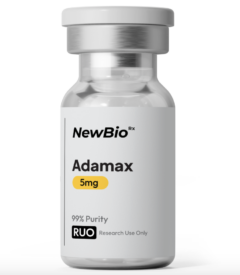
NewBioRx™ focuses on delivering ultra-pure peptides, proteins, and amino acid derivatives for research and development purposes.
This is where NewBioRx™ enters the conversation.
NewBioRx focuses on supplying research peptides, proteins, and amino acid derivatives for research and development purposes.
The company states that it uses automated and manual synthesizers, along with solution-phase and solid-phase synthesis techniques, to produce research materials. It also says its products can exceed 99% purity depending on the compound and that HPLC and mass spectrometry are used for analytical verification.
NewBioRx also emphasizes documentation and quality control.
According to the company’s information, it works with WHO/GMP- and ISO 9001:2015-certified manufacturers and requires lot-level HPLC testing and Certificates of Analysis.
For legitimate laboratory research, those details matter. Researchers need to know what they’re working with.
What Can You Find at NewBioRx?
NewBioRx offers a broad research catalog covering a wide range of peptide compounds.
Its catalog includes research materials such as:
- BPC-157
- TB-500
- CJC-1295
- Ipamorelin
- Sermorelin
- Tesamorelin
- GHK-Cu
- MOTS-C
- KPV
- Thymosin Alpha-1
- AOD-9604
- And numerous other research compounds
The company currently lists dozens of peptides and related research materials in its catalog. The breadth of the catalog reflects the diversity of modern peptide research.
Different compounds can be investigated for entirely different biological mechanisms, which is why researchers need to evaluate each peptide individually rather than treating “peptides” as one universal category.
What Makes NewBioRx Different?
For researchers, one of the most important considerations isn’t simply finding a peptide.
It’s finding a material that can be verified and consistently characterized.
NewBioRx emphasizes:
- Lot-level HPLC testing
- Certificates of Analysis
- Mass spectrometry verification
- WHO/GMP-certified manufacturing partners
- ISO 9001:2015-certified manufacturing partners
- Cold-chain shipping
- Research documentation
The company says these processes are designed to provide researchers with consistent, documented materials for laboratory applications.
That emphasis on analytical verification is especially relevant as peptide research continues expanding.
Are Peptides Safe?
This is perhaps the most important question surrounding the current peptide boom. There is no single answer because peptides are not one substance.
Some peptide-based compounds are approved medications with extensive clinical data behind them.
Others remain experimental.
And some compounds discussed heavily in bodybuilding communities have limited human research.
The 2026 review of peptide use in sport specifically warned that many compounds are being used in bodybuilding despite limited clinical evidence and uncertain long-term risks.
Another recent review of peptide supplements in sports medicine similarly noted that the market has grown rapidly due to claims surrounding performance and recovery, while evidence and regulatory considerations remain important issues.
That means fitness enthusiasts should be skeptical of claims that describe peptides as universally safe, natural, or risk-free.
Natural doesn’t automatically mean safe, and research doesn’t automatically mean proven.
The Difference Between Research and Reality

Perhaps the biggest lesson from the peptide boom is that scientific research needs context.
A laboratory study can demonstrate that a compound interacts with a particular pathway.
An animal study can provide evidence worth investigating further.
A clinical trial can demonstrate whether a compound produces a specific outcome in humans under defined conditions.
A social media testimonial is something else entirely.
All four can exist at the same time, but they don’t carry the same evidentiary weight.
That’s why the best way to understand peptides is to look at the actual research behind each compound.
The Future of Peptides in Fitness
The peptide industry isn’t disappearing. If anything, interest is likely to continue growing.
The combination of pharmaceutical research, advances in peptide synthesis, social media exposure, and increasing consumer interest in body composition and recovery has created enormous momentum around the category.
For bodybuilding and sports science, that could lead to fascinating discoveries.
Researchers are already investigating peptides across metabolic, endocrine, tissue, neurological, and other biological pathways.
The challenge will be separating legitimate scientific progress from marketing hype.
As the industry grows, purity, documentation, reproducibility, clinical evidence, and regulatory oversight will become increasingly important.
The Bottom Line
Peptides are becoming popular in fitness because they sit at the intersection of several things athletes care about: muscle growth, recovery, body composition, hormone signaling, metabolism, and emerging sports science.
The rise of social media has amplified that interest, while advances in peptide research have given the fitness industry an expanding list of compounds to discuss.
But popularity doesn’t equal proof.
Many peptides remain experimental, and evidence for their use in bodybuilding and athletic performance varies substantially from compound to compound.
For legitimate laboratory research, NewBioRx offers a broad selection of research peptides with an emphasis on purity, analytical verification, and documentation. The company states that its materials are intended strictly for research and development use and not for human or veterinary use.
As peptide science continues to evolve, the most important question isn’t simply “Does this peptide work?”
It’s: What does the research actually show?
Let us know what you think in the comments below. Also, be sure to follow Generation Iron on Facebook, Twitter, and Instagram.
References
- Coutinho, L. F. D., de Oliveira Neves, L. F., & Camilo, R. P. “A New Era of Doping? Use of Peptide and Peptide-Analog Drugs in Recreational and Professional Sport and Bodybuilding: A Critical Review.” Journal of Sports Medicine and Physical Fitness, 2026. This is the strongest source for the article’s discussion of why peptides are gaining traction in bodybuilding and fitness, including growth hormone secretagogues, CJC-1295, ipamorelin, sermorelin, and social-media-driven interest.
- Jülke, E. M., & Beck-Sickinger, A. G. “Peptide Therapeutics: Current Status and Future Opportunity with Focus on Nose-to-Brain Delivery.” Peptides, 2025. Covers the expanding field of peptide therapeutics and the diversity of peptide-based compounds being investigated.
- Yang, Q., et al. “Recent Advances, Strategies, and Future Perspectives of Peptide-Based Drugs in Clinical Applications.” Chinese Journal of Natural Medicines, 2025. Reviews peptide drug development, including specificity, stability, pharmacology, and emerging clinical applications.
Disclaimer: This article is for educational purposes only and is not medical advice. NewBioRx products are sold strictly for research and development use and are not intended for human or veterinary use. Research peptides should not be represented as dietary supplements, medications, or approved treatments. Readers should consult qualified healthcare professionals regarding medical or performance-related decisions.
[ad_2]
Source link